The Climate Crisis

We live in a world filled with beauty and wonder. Yet our planet and its inhabitants are facing a severe and immediate threat: climate change. It has caused the oldest and thickest Arctic ice (13 to 20 feet thick) to decline by a stunning 95 percent.[1] Islands are gradually disappearing beneath the ocean’s waves.[2] Nearly 5 million animals recently died, including goats, sheep, and horses, in Mongolia’s worst winter in half a century.[3] Monkeys in Mexico are so overcome with heatstroke that they are falling dead from trees.[4] Six million different species of animals and plants are facing extinction over the next 50 years from soaring temperatures and changing weather patterns.[5] Amphibians, as cold-blooded animals extremely sensitive to changes in temperature and their environment, are especially at risk.[6] Humans are impacted as well, with entire communities being forced to relocate. The Thai government is even considering a plan to move the capital city of Bangkok to a higher location.

Defined by the United Nations as long-term shifts in temperature and weather patterns,[7] climate change has had a major impact on the world, including more intense hurricanes and flooding, disappearing glaciers, and rising sea levels.[8] While the Earth’s climate has always changed, historically those changes happened over thousands of years. But with the advent of the Industrial Revolution in the 19th century, climate change is much more rapid—the Earth’s temperature has risen 2 degrees Fahrenheit since 1850[9]—and has been linked to human activities.[10]

Due to the catastrophic effect this issue has on the environment, Food Empowerment Project prefers the term “climate crisis” rather than “climate change,” and that is what we will use throughout the remainder of this article unless we are describing it specifically in a scientific or geophysical sense or we are quoting another source.

The climate crisis is a very serious threat, and its impact can be felt in many ways with profound consequences for animals, humans, and the planet. Following are some of the more severe effects.
Clarabelle & Valentine from Edgar’s Mission

The Impact on Animals

While images of polar bears precariously perched on melting ice floes have become emblematic of how the climate crisis has affected animals, most species depend on a livable climate. Many of these animals are now at risk, due in part to how the mating, feeding, and migration behaviors of numerous species are connected to temperature, precipitation, and other subtle seasonal shifts. In the world’s most naturally rich areas, for instance, such as the Amazon and the Galapagos, half of all animal species are threatened with extinction from the climate crisis.[11]

Birds illustrate how warming temperatures disrupt the survival of some species, changing where they live, the timing of their migration patterns and egg laying, and even the sizes and shapes of their bodies.[12] Many migratory birds fuel their long journeys by eating berries and insects; however, research has shown that as global climate change causes spring to start earlier, some birds arrive at their destinations after flowers have begun blooming and insects have emerged, leaving them without a food source.[13]

While there may not be an authoritative ranking of which species are most affected by the climate crisis, it is clear that those living in polar and naturally warm habitats are more vulnerable.[14] In polar regions, these include walruses, penguins, reindeer, seals, arctic foxes and hares, orcas, beluga whales, narwhals, and, of course, polar bears. Extreme heat, meanwhile, is affecting a growing number of animals, including birds in the Mojave Desert, mammals in Australia, and bumblebees in North America.[15]

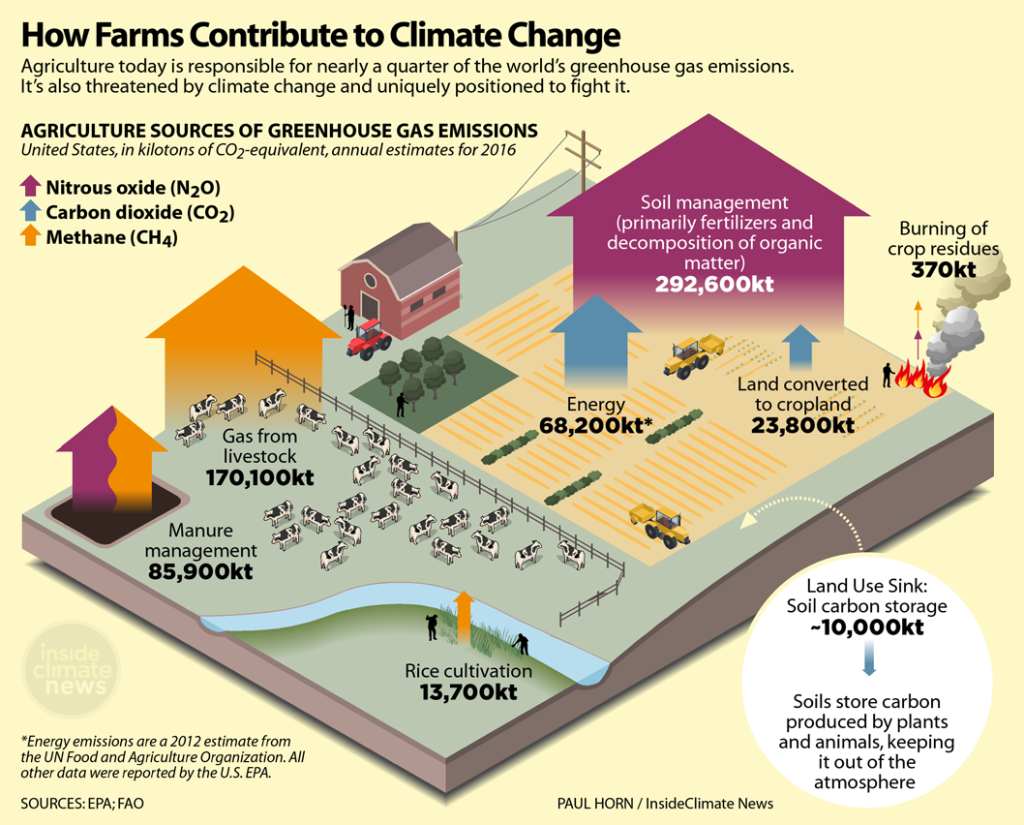
If we consider just methane emissions, we can look to the UNEP methane assessment and see that animal ag is responsible for 32 percent of total global methane emissions, almost equal to the contribution from fossil fuels which are at 35 percent of global methane emissions.

kt = kilotonne

One of the biggest drivers of the climate crisis is animal agriculture. Just how big is a topic of ongoing research. Efforts to quantify the climate impact of specific industries are always evolving, just as the emissions themselves are always in flux. One of the difficulties in communicating the extent of animal ag’s climate impact is that the industry is responsible for several types of anthropogenic (human-made) emissions, including carbon dioxide (CO2), methane (CH4), and nitrous oxide (N2O). “It is tricky to get a clean and simple number for percentage of global emissions from animal ag because emissions are tough to track and it is challenging to communicate the total impact of the different types of greenhouse gas pollution involved,” explains climate scientist Dr. Shaina Sadai. “When aggregating the full effect of different greenhouse gasses, we always have to make value choices about how to communicate the net effect of greenhouse gasses that have different warming potentials and atmospheric lifetimes. While this aggregate effect is often communicated using a 100-year timeframe, this can mask the impact of methane, a gas which is far more potent than CO2 but spends a much shorter amount of time in the atmosphere.”

According to Dr. Sadai, one number we can pin down is that of methane emissions. “If we consider just methane emissions, we can look to the UNEP methane assessment[16] and see that animal ag is responsible for 32 percent of total global methane emissions, almost equal to the contribution from fossil fuels which are at 35 percent of global methane emissions.”[17] Methane is responsible for 30 percent[18] of the warming that has already occurred, and steep reductions in methane emissions are crucial for meeting the goals of the Paris Agreement and limiting the impacts of the climate crisis.[19]

Ironically, not only is humanity’s exploitation of animals for food a significant driver of the climate crisis, but climatic extremes cause these animals to suffer and die. Nearly 10,000 chickens perished in July 2022, for example, while being transported to slaughterhouses when temperatures in England and Wales hit 104 degrees Fahrenheit (40 degrees Celsius) for the first time ever.[20] In 2023, meanwhile, 462 pigs died in Harbin, China, during a stifling evening that reportedly reached 140 degrees Fahrenheit (60 degree Celsius).[21]

Cows suffer as well. A heatwave killed at least 2,000 cows in southwestern Kansas in 2022,[22] and some 370 cows died in Iowa in July 2023 during what was described as the planet’s hottest month ever recorded. “They just start dropping and there was nothing you could really do about it,” said an Iowa farmer, clearly only concerned with his profits. “I’ve never seen anything like it.”[23] According to a study published in 2023, an estimated 77 percent of cows currently raised for “meat” and dairy are exposed to climate conditions likely to cause heat stress for at least 30 days each year, with 20 percent of cows (those in the tropics) exposed to heat stress conditions year-round. By 2100, these percentages are projected to increase to 90 percent of cows exposed for at least 30 days each year, and 34 percent experiencing year-round heat stress.[24]

Heat stress increases respiration and mortality, reduces fertility, modifies animal behavior, and suppresses the immune and endocrine system, thereby increasing an animal’s susceptibility to some diseases.[25] While farmers in the U.S. enjoy taxpayer support in the form of the USDA’s Livestock Indemnity Program, which provides compensation for animal deaths due to adverse weather,[26] the animals receive no relief. 

Although it may be apparent how animals on land are impacted by the climate crisis, most of the planet’s animal species—about 78 percent—live in the ocean.[27] We have no idea exactly how many species there are down there; indeed, scientists estimate that 91 percent of marine species have yet to be identified.[28] What we do know is that those who dwell beneath the ocean’s waves are faring poorly as climate-driven changes such as extreme weather events and higher ocean temperatures impact the health of marine animals and their ability to survive.

An increase in ocean temperatures, for example, is one of the leading causes of ocean deoxygenation, which results in less oxygen being available to marine life.[29] This deoxygenation occurs because the ocean absorbs more than 93 percent of the Earth’s warming from climate change, and warm water holds less oxygen than cold water; the higher the temperature, the less soluble oxygen becomes.[30]

Ocean Defenders

 Food Empowerment Project

The Impact on Humans

According to the World Health Organization, the climate crisis “is directly contributing to humanitarian emergencies from heatwaves, wildfires, floods, tropical storms and hurricanes and they are increasing in scale, frequency and intensity.” WHO adds: “Research shows that 3.6 billion people already live in areas highly susceptible to climate change. Between 2030 and 2050, climate change is expected to cause approximately 250,000 additional deaths per year, from undernutrition, malaria, diarrhea and heat stress alone.”[31]

The climate crisis can impact humans in other ways as well, such as harming food production and damaging ecosystems and infrastructure.[32]

Certain groups, however, are more vulnerable than others to the effects of the climate crisis due to socioeconomic factors like income, housing, education, and access to health care and even air conditioning. These socially vulnerable groups include Black, Brown, and Indigenous peoples and low-income groups. These people may be more at risk because they may live in locations prone to climate-related health hazards, including flooding, extreme heat, and air pollution; they may have higher rates of existing medical conditions, such as physical disabilities, kidney disease, diabetes, asthma, or heart disease, which can be worsened by the climate crisis; they may live in urban and rural areas with poorly maintained or aging infrastructure that may not be able to handle climate-related events; and they may have limited financial resources or cultural, language, or citizenship barriers that restrict their access to health care, social services, and safe, nutritious food.[33]

An analysis by the EPA released in 2021 shows that the most severe harms from the climate crisis fall disproportionately upon underserved communities who are least able to prepare for, and recover from, heat waves, poor air quality, flooding, and other impacts. The report found that with 3.6°F (2°C) of global warming, Black and African American individuals are 34 percent more likely to currently live in areas with the highest projected increases in childhood asthma diagnoses (this rises to 41 percent under 7.2°F [4°C] of global warming), and that they are 40 percent more likely to currently live in areas with the highest projected increases in extreme temperature related deaths (this rises to 59 percent under 7.2°F of global warming).[34]

An analysis by the EPA released in 2021 shows that the most severe harms from the climate crisis fall disproportionately upon underserved communities who are least able to prepare for, and recover from, heat waves, poor air quality, flooding, and other impacts. The report found that with 3.6°F (2°C) of global warming, Black and African American individuals are 34 percent more likely to currently live in areas with the highest projected increases in childhood asthma diagnoses (this rises to 41 percent under 7.2°F [4°C] of global warming), and that they are 40 percent more likely to currently live in areas with the highest projected increases in extreme temperature related deaths (this rises to 59 percent under 7.2°F of global warming).[34]

According to one Latinx advocacy organization, higher temperatures and heat waves are leading to a disproportionate impact on Latinx laborers. “For many Latinos, staying indoors during high-heat days is not an option. Hazardous conditions are routine for farmworkers and include pesticide exposure, heat stress, lack of shade and adequate clean drinking water. Regardless of 100°F or higher temperatures, unhealthy air quality, and lack of proper protection, many farmworkers continue to work in these hazardous conditions to support their families.” The organization points out that Latinos are three times more likely to die from heat on the job than non-Latinos, and Latinos are 21 percent more likely than whites to live in urban heat islands, or areas dominated by asphalt and concrete where parks, shade-providing trees, and other vegetation are lacking.[35]

The risk for Latinos dying from heat exposure increases substantially if they happen to be a farm worker. One study found that agricultural workers are 35 times more likely to die from heat-related stress than workers in other industries.[36] Research conducted in Florida found that over a three-day period most farm workers ended their days dehydrated, and about one-third of workers showed markers of acute kidney damage.[37] Rising temperatures associated with the climate crisis also allow “pest” populations to grow and expand their range, leading to greater use of toxic pesticides on farms.[38] Meanwhile, changing weather patterns result in more frequent and longer droughts, increasingly severe storms and wildfires, and other natural disasters that threaten farm workers’ food security and access to clean water, in addition to their physical safety.[39]

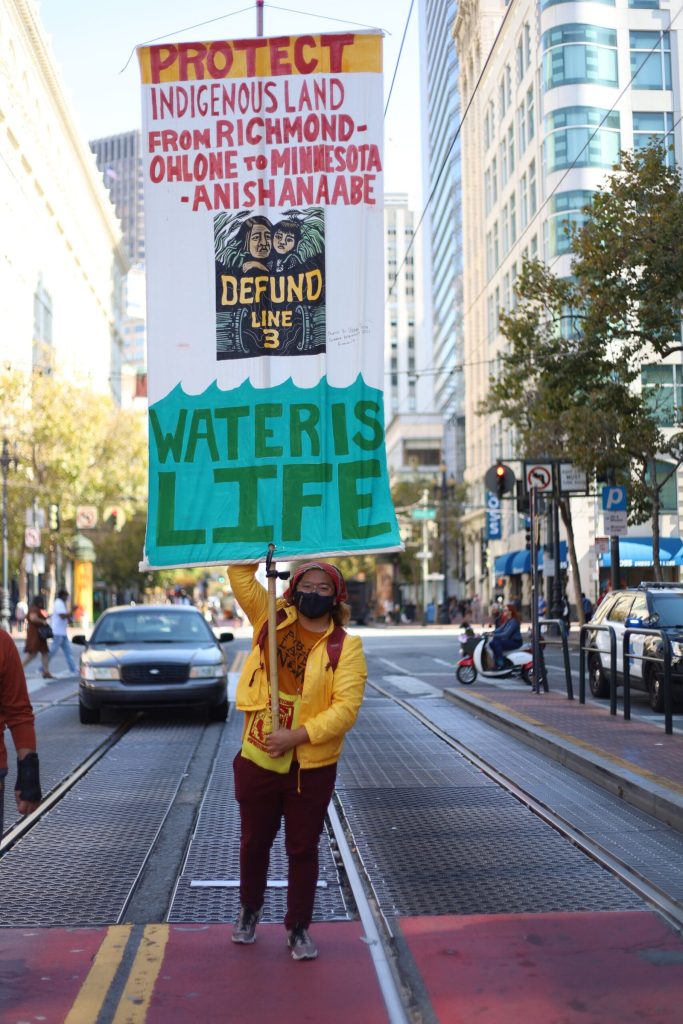
The climate crisis continues to negatively affect the livelihoods, health, and cultural practices of Indigenous peoples, as well. Although health risks and impacts to Indigenous peoples are the same as those met by the general U.S. population, factors known as the social determinants of health are unique and contribute to the increased vulnerability of Indigenous peoples to harmful and potentially fatal health outcomes. Many Indigenous peoples, for instance, continue to experience historical trauma associated with colonization, removal from their homelands, and loss of their traditional ways of life, and this is a contributor to current physical and mental health impacts.[40]

Furthermore, Indigenous peoples were displaced to areas of the U.S. that are now more exposed to climate crisis risks since these lands are more vulnerable to climate change and contain fewer resources.[41]

“Native tribes are experiencing an environmental peril exacerbated by policies—first imposed by white settlers and later the United States government—that forced them onto the country’s least desirable lands,” says The New York Times. “In the Pacific Northwest, coastal erosion and storms are eating away at tribal land, forcing native communities to try to move inland. In the Southwest, severe drought means the Navajo Nation is running out of drinking water. At the edge of the Ozarks, heirloom crops are becoming harder to grow, threatening to disconnect the Cherokee from their heritage.” According to a New York Times review of government data, the federal government has continued to neglect Native American communities, where substandard housing and infrastructure make it harder to cope with climate shocks, further exacerbating the damage from its past decisions.[42]

“Indigenous peoples have always been on the front lines,” says Nikki Cooley, co-manager for the Institute for Tribal Environmental Professionals’ Tribal Climate Change Program in Flagstaff, Arizona. “Tribes have always been adapting to climate change. Now we have to adapt even faster.”[43] (As part of this adaptation, the knowledge and wisdom of Indigenous tribes has been called upon by forestry departments to help protect the land from such disasters as wildfires.)

Photo Credit: Extinction Rebellion
Photo Credit: Food Empowerment Project
Photo Credit: Andy Myers

“Native tribes are experiencing an environmental peril exacerbated by policies—first imposed by white settlers and later the United States government—that forced them onto the country’s least desirable lands,” says The New York Times. “In the Pacific Northwest, coastal erosion and storms are eating away at tribal land, forcing native communities to try to move inland. In the Southwest, severe drought means the Navajo Nation is running out of drinking water. At the edge of the Ozarks, heirloom crops are becoming harder to grow, threatening to disconnect the Cherokee from their heritage.” According to a New York Times review of government data, the federal government has continued to neglect Native American communities, where substandard housing and infrastructure make it harder to cope with climate shocks, further exacerbating the damage from its past decisions.[42]

“Indigenous peoples have always been on the front lines,” says Nikki Cooley, co-manager for the Institute for Tribal Environmental Professionals’ Tribal Climate Change Program in Flagstaff, Arizona. “Tribes have always been adapting to climate change. Now we have to adapt even faster.”[43] (As part of this adaptation, the knowledge and wisdom of Indigenous tribes has been called upon by forestry departments to help protect the land from such disasters as wildfires.)

jtalliance.org

The Impact on The Planet

Absorbing more than 93 percent of the heat that’s trapped by greenhouse gasses and as much as 30 percent of the carbon dioxide emitted from burning fossil fuels,[44] the ocean is taking the brunt of the climate crisis humans have created. While the trapped heat is resulting in a surge in ocean temperatures that is killing marine ecosystems,[45] the carbon dioxide emissions trigger a chemistry change that makes the water more acidic, dissolving the shells of sea creatures.[46] Meanwhile, melting ice on the Earth’s polar regions has resulted in rising sea levels—since 1993, sea levels have risen 0.13 inches (3.4 millimeters) per year.[47] Indeed, scientists calculate that by 2060, 60 percent of Miami and its surrounding county will be underwater,[48] and island nations such as Maldives, Palau, and Micronesia will be submerged by the end of this century.[49]

Photo Credit: Andy Myers

On land, the Earth is experiencing higher temperatures, melting glaciers, shifting precipitation patterns, severe drought, and increased wildfires and floods, among other effects.[50] If the climate crisis is not controlled, scientists predict the Earth will suffer further consequences. In North America, these include decreasing snowpack in the western mountains; a 5-20 percent increase in yields of rain-fed agriculture in some regions; and an increased frequency, intensity, and duration of heat waves in cities that currently experience them. Latin America will experience the gradual replacement of tropical forest by savannah in eastern Amazonia; a risk of significant biodiversity loss through species extinction in many tropical areas; and significant changes in water availability for human consumption, agriculture, and energy generation. In Africa, between 75 and 250 million people are projected to be exposed to increased water stress; yields from rain-fed agriculture could be reduced by up to 50 percent in some regions; and agricultural production, including access to food, may be severely compromised. And in Asia, freshwater availability is projected to decrease in Central, South, East, and Southeast Asia by the 2050s; coastal areas will be at risk due to increased flooding; and the death rate from disease associated with floods and droughts expected to rise in some regions.[51]

Absorbing more than 93 percent of the heat that’s trapped by greenhouse gasses and as much as 30 percent of the carbon dioxide emitted from burning fossil fuels,[44] the ocean is taking the brunt of the climate crisis humans have created. While the trapped heat is resulting in a surge in ocean temperatures that is killing marine ecosystems,[45] the carbon dioxide emissions trigger a chemistry change that makes the water more acidic, dissolving the shells of sea creatures.[46] Meanwhile, melting ice on the Earth’s polar regions has resulted in rising sea levels—since 1993, sea levels have risen 0.13 inches (3.4 millimeters) per year.[47] Indeed, scientists calculate that by 2060, 60 percent of Miami and its surrounding county will be underwater,[48] and island nations such as Maldives, Palau, and Micronesia will be submerged by the end of this century.[49]

On land, the Earth is experiencing higher temperatures, melting glaciers, shifting precipitation patterns, severe drought, and increased wildfires and floods, among other effects.[50] If the climate crisis is not controlled, scientists predict the Earth will suffer further consequences. In North America, these include decreasing snowpack in the western mountains; a 5-20 percent increase in yields of rain-fed agriculture in some regions; and an increased frequency, intensity, and duration of heat waves in cities that currently experience them. Latin America will experience the gradual replacement of tropical forest by savannah in eastern Amazonia; a risk of significant biodiversity loss through species extinction in many tropical areas; and significant changes in water availability for human consumption, agriculture, and energy generation. In Africa, between 75 and 250 million people are projected to be exposed to increased water stress; yields from rain-fed agriculture could be reduced by up to 50 percent in some regions; and agricultural production, including access to food, may be severely compromised. And in Asia, freshwater availability is projected to decrease in Central, South, East, and Southeast Asia by the 2050s; coastal areas will be at risk due to increased flooding; and the death rate from disease associated with floods and droughts expected to rise in some regions.[51]

Photo Credit: Andy Myers

Placing blame, taking action

From driving an electric or hybrid vehicle to going vegan, there are steps we can all take to ease the climate crisis. But the reality is, most of the blame lies squarely with corporations, which prioritize profits over social responsibility and environmental sustainability. As we have seen, the animal agriculture industry has been a major contributor to the crisis, and they should be held accountable. According to a 2017 report, however, most of the world’s greenhouse gasses are emitted by businesses that produce oil, gas, and coal. The Carbon Majors report, released by the Climate Accountability Institute, revealed that 71 percent of all global greenhouse gas emissions since 1988 can be traced to just 100 fossil fuel producers.[52]

One of the largest offenders on the list is BP, formerly known as the British Petroleum Company. BP has one of the worst environmental records in the industry, but it may forever be linked to a catastrophic event in 2010, when its Deepwater Horizon oil rig exploded and sank, spewing 4 million barrels of crude oil into the Gulf of Mexico over 87 days.[53] The disaster took the lives of 11 workers and killed or harmed tens of thousands of animals, including marine mammals, birds, turtles, fishes, and many others.[54]

Like other fossil fuel producers, BP doesn’t want to admit their role in the climate crisis. In 2004, they hired Ogilvy & Mather, a British advertising, marketing, and public relations agency based in New York City, to refocus the climate narrative away from Big Oil and place the responsibility onto individuals. The ad agency thus created the concept of the “carbon footprint,” and BP rolled out a propaganda campaign centered on a personal carbon calculator and the message that individual actions—such as walking to work, adding solar panels to your house, or drinking from a reusable water bottle—held more environmental sway than anything a fossil fuel company could do.[55] Other corporations, including ExxonMobil, have consistently used “rhetoric aimed at shifting responsibility for climate change away from itself and onto consumers.”[56]

That’s not to say that we as individuals should ignore the actions that we can all take on the planet’s behalf. According to a 2023 study from the University of Oxford, for example, people who follow a plant-based diet account for 75 percent less in greenhouse gas emissions than those who eat more than 3.5 ounces of meat a day, and a vegan diet also results in significantly less harm to land, water, and biodiversity. Vegan diets had the lowest totals of greenhouse gas emissions in the study, accounting for just 5.4 pounds of carbon dioxide a day, while people who ate more than 3.5 ounces of meat daily accounted for 22.5 pounds of carbon dioxide emissions a day. This was due to the farming of animals, land used to grow animal feed, and other variables. The most dramatic difference seen in the study was for emissions of methane, a potent greenhouse gas that is produced by cows and sheep, which were 93 percent lower for vegan diets compared with high-meat diets.[57]

Another important action we can take is to vote—vote for candidates who not only acknowledge that there is a climate crisis but are committed to reducing the reliance on fossil fuels and banning oil fracking while advancing the benefits of clean energy. You can use this “Climate Change Voter’s Guide,” for example, to see where U.S. legislators stand on this issue. 

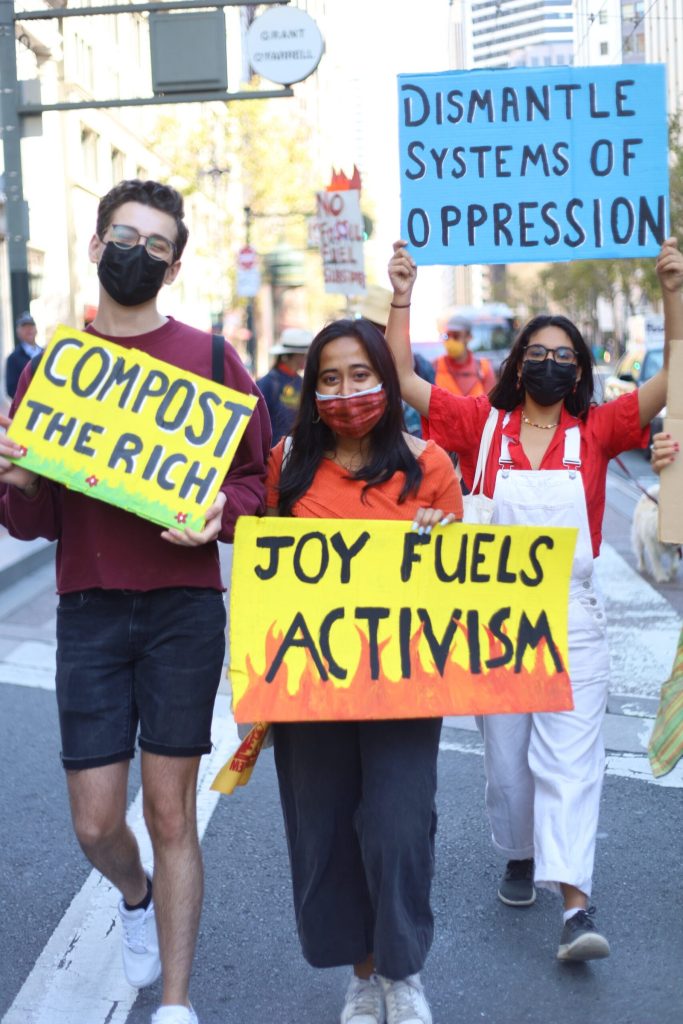
We can also work to dismantle systems of oppression, which are at the root of the climate crisis. “Working towards climate justice means getting to the root of the causes, not merely reducing emissions,” says Dr. Sadai. “Racism, colonialism, capitalism, speciesism, and all other oppressive structures need to be dismantled to build a world with a stable climate and where all are safe and free.”[58]

Each of us plays a role in helping the most vulnerable human and animal populations overcome this crisis—a crisis the Global North is largely responsible for. Among the most vocal climate crisis leaders has been Adrienne Hollis, PhD, JD, who serves as vice president for Environmental Justice, Public Health and Community Revitalization for the National Wildlife Federation and urges members of the Black community to become more involved in this issue. “We have to be active. We have to step up and claim our space,” she says. “We have to fight to protect ourselves and each other. Or nothing will be done to stop the practices that place us at risk—at risk from extreme heat for example, like lack of access to greenspace like parks or to cooling centers. Or the effects that climate change has on agriculture, on the availability of healthy foods or access to food. It is literally a matter of life or death.”[59]

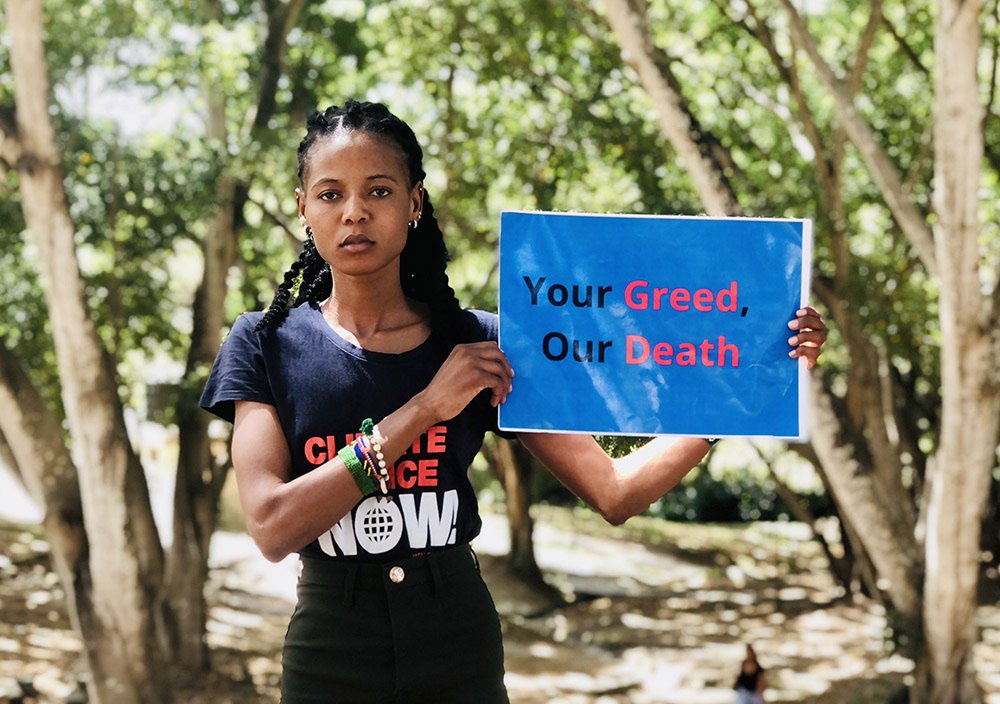
“Our planet is irreplaceable, yet some groups treat it as if it were dispensable,” adds Kennedy Little, F.E.P.’s youth advocacy team member. “As youth, we face the consequences of their actions but are resilient and possess creative tools to make meaningful change. While the responsibility shouldn’t solely be on us, we can stand in solidarity and encourage others to join us in the fight for our planet. It’s vital that youth of color, who are primarily affected, take the lead in this movement. This unity can create collective power, amplify our voices, and heal our communities and environment.”

As youth, we face the consequences of their actions but are resilient and possess creative tools to make meaningful change. While the responsibility shouldn't solely be on us, we can stand in solidarity and encourage others to join us in the fight for our planet. It's vital that youth of color, who are primarily affected, take the lead in this movement. This unity can create collective power, amplify our voices, and heal our communities and environment.

References