

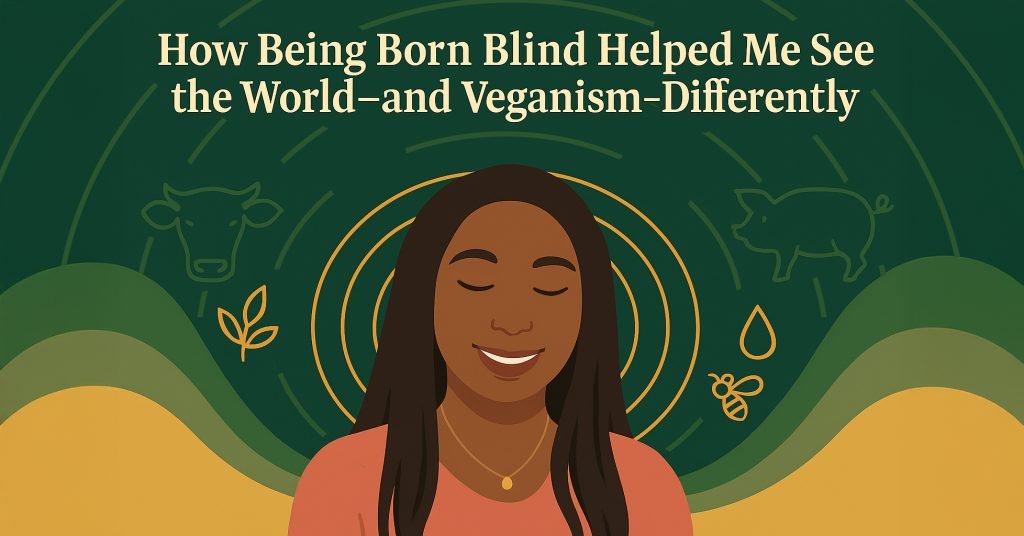
I was born blind. The technical term for my condition is congenital cataracts, which only affects approximately 3 in every 10,000 live births, 0.03% of the U.S. population. Immediately after birth, I underwent cataract removal surgery, and following the procedure, my mom took on the challenging responsibility of inserting and removing aphakic lenses for me each day. Aphakic lenses are a special type of lens used to help someone who has had their natural lens removed see more clearly. This daily task caused significant stress for both of us, as it required her to apply considerable pressure to my eyes as an infant. Despite these difficulties, her dedication enabled me to achieve some degree of vision during a critical period of my development.
When I was 13, I was extremely privileged to receive artificial lenses that allow me permanent, yet heavily flawed vision. I always knew that many individuals, especially those who do not have access to quality healthcare are not able to receive this type of care.
When people ask me what it’s like to be born blind, I often tell them that I don’t just see the world differently—I experience it differently. My journey has shaped not only how I navigate daily life, but also how I relate to others, to nature, and to animals. In many ways, my impacted vision has given me a unique perspective on veganism—one rooted in empathy and a deep connection to the sounds of the world around me.
Growing up with limited sight, I learned to rely on my other senses, especially hearing. While others might be captivated by the beauty of a sunset or the wonderful colors of a butterfly, I find beauty in the rustle of leaves, the rhythm of rain, and the gentle hum of the bees. Sounds paint my world, and they often reveal truths that might go unnoticed by those who see without any obstruction.
This heightened sense of hearing has also brought me closer to animals in a way that’s deeply personal. I can hear the subtle differences in their voices. I can easily recognize the cries that echo from innocent animals held captive in slaughterhouses. These sounds are haunting, impossible to ignore, and they resonate with me on a level that’s hard to describe.

For many, veganism is sparked by graphic videos and photographs that expose the harsh realities of animals raised for consumption. For me, it’s the sounds that linger. The fear in an animal’s cry, the desperation in their calls and the silence that follows. These auditory experiences have shaped my understanding of suffering and compassion. They remind me that animals are sentient beings with voices, emotions, and a desire for freedom, just like us.

Having impacted vision has made me more attuned to suffering that isn’t always visible. It’s taught me to listen deeply, to be present, and to care about the unseen and unheard. My journey to veganism wasn’t just about changing what I eat; it was about honoring the voices I hear and the lives they represent. It’s about standing up for those who cannot speak for themselves, and using my own voice, however I can, to advocate for a kinder, more compassionate world.
I often say that the limits of my vision are both a challenge and a gift. It’s allowed me to experience the world in a way that’s uniquely my own, and it’s given me a perspective on veganism that’s rooted in empathy and the ability to feel pain that can not always be seen by the human eye. I hope that by sharing my story, I can inspire others to listen more closely, to the world, to each other, and to the animals who share this planet with us.
After all, sometimes the most powerful truths aren’t always seen—they’re heard.

This Post Has 3 Comments
Beautifully written. Thank you for sharing. Great perspective.
I agree that things can happen in an unseen world
Beautiful & inspirational account on triumphing over physical challenges. I love how you used your other senses on which to base your compassionate reasons for choosing to become vegan.