


The Buzz About Honey
 It all begins with plants. Plants and insects have a collaborative relationship, and perhaps the most important element of that collaboration is how insects help certain plants reproduce. They do this through pollination, with many plants attracting winged insects to their flowers using sweet nectar, which contains sugars, vitamins, and additional nutrients that serve as a high-energy food source for insects such as bees. Along with nectar, flowers of these plants also contain pollen, grain-like particles that are another source of food for bees and are responsible for fertilizing a plant through that plant’s ovary. (While nectar is vital for energy, pollen provides bees with protein, which is essential for the development of young bees.)

 The honey industry shares several parallels with the dairy industry. For one thing, the honeybee (Apis mellifera) is not native to North America; just like cows, honeybees were brought to the U.S. centuries ago from Europe to serve as agricultural animals.[3] In addition, both the dairy industry and the commercial honey industry are built upon models in which humans ultimately steal the animals’ food source and replace it with an inferior and unnatural substitute. Like cows, honeybees are artificially inseminated. And, just as cows and calves are considered “expendable” in the dairy industry, so too are bees sometimes killed after they have outlived their usefulness: bee farms have been known to destroy entire colonies after harvesting because it’s cheaper than feeding the bees throughout the winter.[4]
Let’s look closer at some of the troubling realities of the honey industry.
Bees are given artificial feeds. As we’ve established, honey and pollen are foods for bees. Since most beekeepers want to profit from the honey, they feed the bees a substitute, usually sugar syrup or high-fructose corn syrup.[5] These artificial foods have been found to harm the immune system of bees and cause genetic changes, ultimately diminishing their natural defenses against pesticides.[6, 7] Indeed, the practice of feeding bees high-fructose corn syrup has even been tied to the collapse of bee colonies around the world, since the substitute does not contain the enzyme they need to help to fight off toxins.[8] So, not only is honey the food nature intended for bees, but it contains vital protective properties meant to help bees survive.
Bees are artificially inseminated. In nature, queen bees select whom they mate with, usually 10 to 20 drones, and copulate in flight. In the honeybee industry, semen is collected from mature drones who have been caught and stored in cages. After being selected, the drone’s head is crushed, his abdomen is squeezed, and his semen is collected in a syringe.[9, 10] The queen is then immobilized in a chamber and knocked out with carbon dioxide gas and the semen from about 10 drones is forced into her.[11, 12] This procedure is meant to ensure honey farms are using the best “breeding stock.” One company that specializes in providing queens even boasts: “We can make inseminated breeder queens to order, per your specifications.”[13]
Bees are intentionally killed. In addition to dying from weakened immune systems and drones being killed in the process of artificial insemination, bees used for honey may be killed in other ways. Hives are prone to disease, for example, and many beekeepers will simply “depopulate” an entire colony of bees by burning them alive in their hives.[14] (Beekeeping literature actually recommends fire for the “euthanasia” of bees.)[15] Meanwhile, honeybee farmers not wishing to go to the expense of maintaining hives throughout the winter often gas the colony with calcium cyanide.[16]
Bees are accidentally killed. In the course of removing honeycomb and beehive components such as frames, beekeepers have been known to kill worker bees, unborn bees (known as bee brood), and even the queen.[17, 18] For beekeepers, it’s just one of the consequences of doing business. “I kill brood all the time for my IPM ,” boasts one beekeeper. “I cut the tops off half of my drone brood during the spring and summer and yank their corpses right out.”[19]
Queen bees often have their wings clipped. As a queen bee ages, a new queen is born in the colony to replace her. At this point, the older queen will fly away to start a new colony—taking the bees with her. To prevent such “swarming,” beekeepers routinely clip one or both wings of the queen, thus preventing her from ever leaving.[20] But many beekeepers argue that clipping the queen’s wings does not prevent the other bees from swarming.
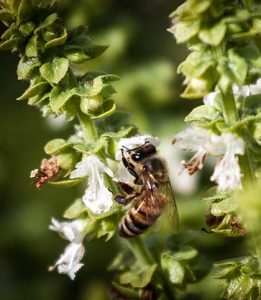
And let’s not overlook how important bees are to our planet. Do you like flowers? You can thank bees for pollinating plants. Do you like eating fruits, nuts, and vegetables, including almonds, asparagus, avocados, broccoli, cherries, citrus fruit, cranberries, cucumbers, melons, and soybeans? Yep, bees again; in fact, about one-third of the food we eat comes from crops pollinated by honeybees.[28] Animals in the wild benefit from the pollination efforts of bees, too. Bees are even partly responsible for the proliferation of the Earth’s trees that produce the oxygen we breathe and absorb CO2! So show them some love!
One final note to consider: A worker bee will live about one month and produce just a twelfth of a teaspoon of honey in her entire lifetime,[29] which means that a single teaspoon of honey added to a cup of tea is actually the life’s work of 12 bees. Why steal their hard-earned sustenance when we have so many other options?
