

“We thought if we gave the people food, they might want clothing. If we gave them clothing, they might want housing. If we gave them housing, they might want land, and if they had land, they might want some abstract thing called freedom.” —Elaine Brown, 1992
Last year, my husband and I attended an event with some of the leading food justice advocates in the Bay Area, including one of the founding members of the Black Panther Party (BPP), David Hilliard. The event took place in Vallejo and encouraged people to get involved with food justice in the community.
After the event, I contacted David as I wanted to share with him the work Food Empowerment Project had done on access issues in Santa Clara County, and I was interested in learning more about the food programs organized by the BPP in the 1960s and ‘70s.
During this meeting, David asked if we would work with him and the Intercommunal Institute for Research and Social Change (IIRSC – a project of the Huey P. Newton Foundation, which he is the director of) on access issues in Vallejo.
Since then we have been busy doing research on Vallejo and updating our tools with the volunteer help of our intern from Stanford, Emily Alsentzer, and sociologist Dr. Carol Glasser.
David and I have also had some enriching conversations about activism and what the BPP stood for, and so muh of it is truly relevant today.
But what has also come out of this is a better understanding of the BPP and Huey P. Newton. I have been incredibly lucky to sit with David and watch old TV interviews of Huey as well as listen to interviews of him. His integrity was something I feel so many leaders lack today. In one of the interviews he is asked his opinion of someone (whom the interviewer knew he was not fond of), and Huey stated that he was not going to say anything publically against this person as he had not said anything publically against him.
And for those of you who know me and how I feel about similar issues in the animals rights movement, I particularly liked this statement by him: “Too many so-called leaders of the movement have been made into celebrities and their revolutionary fervor destroyed by the mass media… The task is to transform society; only the people can do that – not heroes, not celebrities, not stars.”
And as incredible as it is to hear the interviews and be blown away by this articulate, holistic and humble man’s insights, it is tough to realize that, in some ways, very little has changed.
What the BPP is mostly known for today is arming themselves for self-protection.
And yet, rarely discussed is their full Ten Point Program approach to self defense “in terms of political empowerment, encompassing protection against joblessness and the circumstances that excluded blacks from equal employment opportunities, against predatory business practices intended to exploit the needs of the poor; against homelessness and inferior housing conditions; against educational systems that denigrate and miscast the histories of oppressed peoples; against a prejudiced judiciary that convicts African Americans and other people of color by all-white juries; and finally, against the lawlessness of law enforcement agencies that harass, abuse and murder black with impunity.”
I would argue (if I even needed to) that all of the issues listed above are still, unfortunately, real concerns facing communities of color in the US.
In his introduction to The Huey P. Newton Reader, David goes on to say, “Still, it was the police patrols and not our work on behalf of jobs and housing that won the Black Panthers immediate notoriety.”
And yet, some of the lasting impact of the Black Panther Party is their work on food issues.
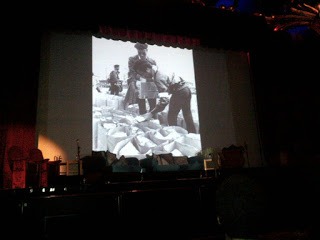
In January 1969, the Panthers would cook and serve breakfast to poor inner city youth in the area – it started in Oakland and they were eventually set up in cities across the country. The program fed thousands of kids across the US.
According to the Panthers, “Children cannot reach their full academic potential if they have empty stomachs.”
Hmm….it seems they knew a long time ago what researchers are still working out: students perform better when they are well-nourished.
This and their free grocery giveaways were part of their Survival Programs.
Food Empowerment Project, which in comparison is a very young organization, is honored to continue our work on food justice with members of the IRRC, who have been pioneers in looking out for the people.


This Post Has 4 Comments
Thanks for writing such a good article, I stumbled onto your blog and read a few post. I like your style of writing… Easy Breakfast
I enjoyed reading the article and thank you for sharing it. I appreciate your effort and good to know more details regarding the topic. brick effect wallpaper
Hi! This is amazing content! I’m part of a group who dedicates to translate relevant content to Portuguese to make it accessible to Brazilian readers. We always give credit and link originals. Could we translate this article? Our work is non-profit, no commercial interest involved.
Hi, Débora!
Thank you for your support of our work!
We would love to have you translate our blog. Could you please share it with us once you do? And please make sure to credit Food Empowerment Project http://www.foodispower.org.
Thank you!