When I became vegan five years ago, I was overwhelmed by the amount of information and choices that I faced. Social media had filled my head with ideas about what being vegan “should” look like and what products I needed to buy. I was determined to stick with my commitment to be vegan, even if I didn’t have it all figured out. Along the way, I ended up finding affirmation of my choice in an unexpected place.
I had dreaded telling my Korean grandmother about my veganism. I worried it would be disrespectful to make her adjust some of the signature recipes she had been cooking for years. Although she had many questions at first, and it took her some time to understand it was more than a diet change, my veganism has brought us closer together and made me feel more connected to my Korean heritage than ever.
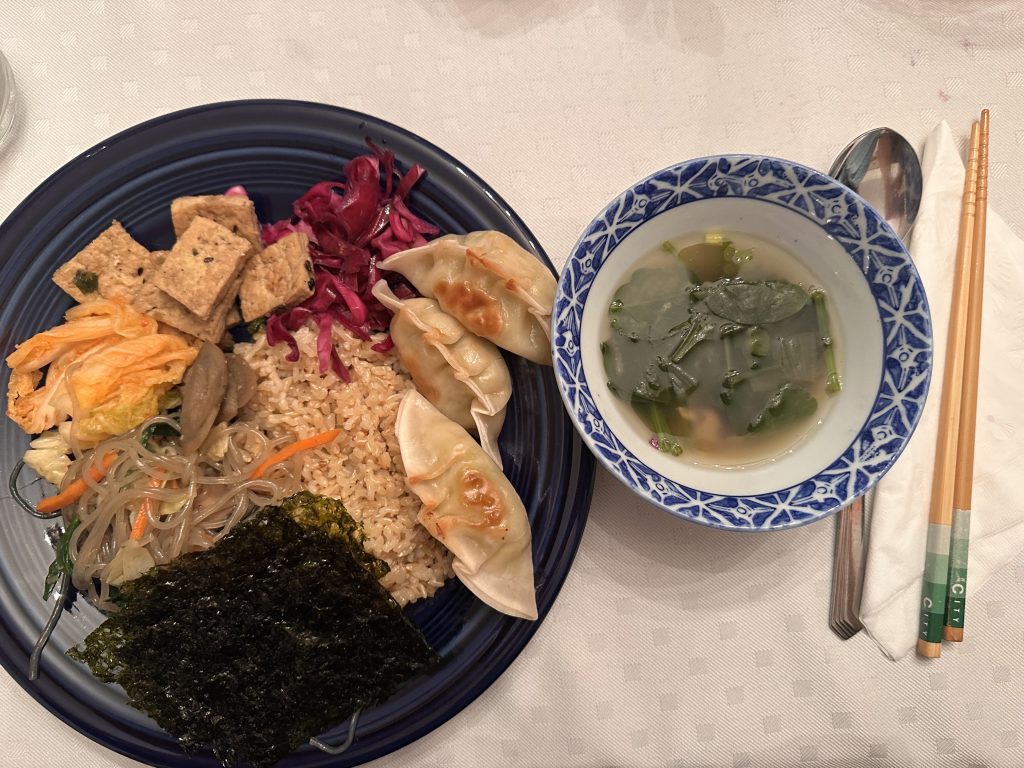
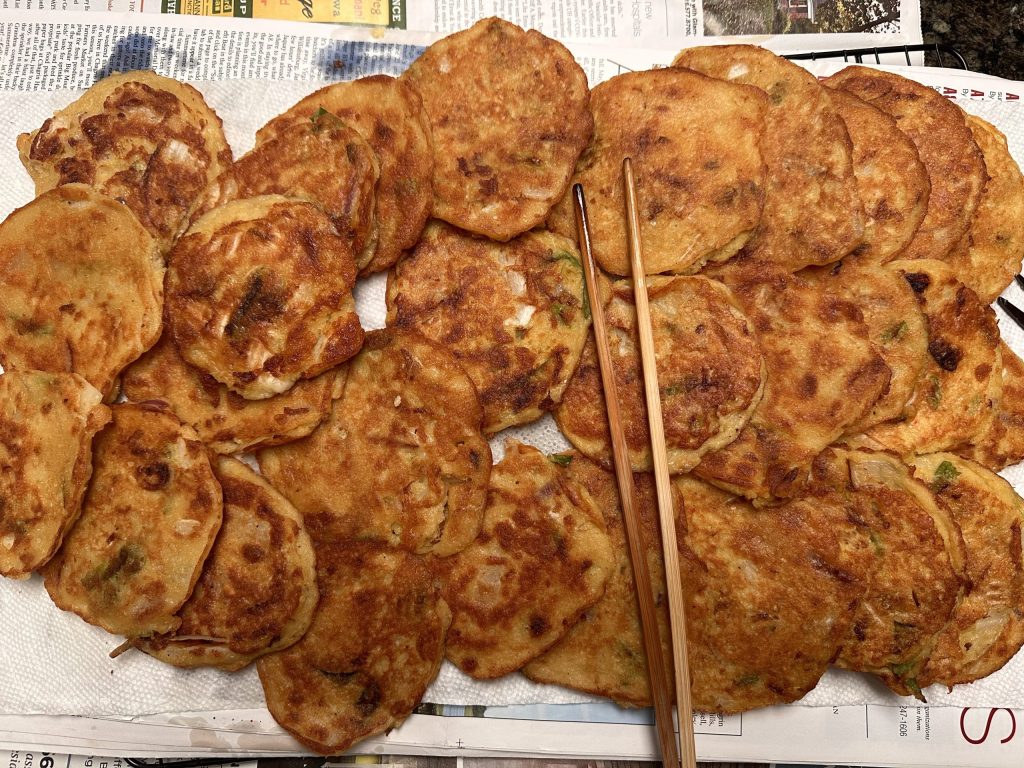
One of the first recipes my grandmother showed me how to make after I became vegan was Bindae-tteok: savory Korean omelette-like pancakes made by soaking and blending mung beans, adding vegetables, and pan-frying. The mung bean acts as the binding agent in place of egg. I began to realize just how many Korean dishes were inherently vegan, and it filled me with a feeling of pride for my culture. At the same time, I was curious as to why so many people believe East Asian cuisines are not compatible with veganism.
Today, the consolidation of companies that produce and profit from vegan food innovations has led to what some scholars are calling the rise of Big Veganism. Although the mainstreaming of veganism can call more attention to the environmental and ethical goals of the vegan movement, it packages veganism as a newly discovered, modern concept that can only be accessed through shiny new products found in the grocery aisle. This phenomenon tends to position veganism as a trend and distances people from what the vegan movement is really about: liberation for all. It also codes veganism as a White, Western, corporate movement, further separating it from its origins in the Global South.
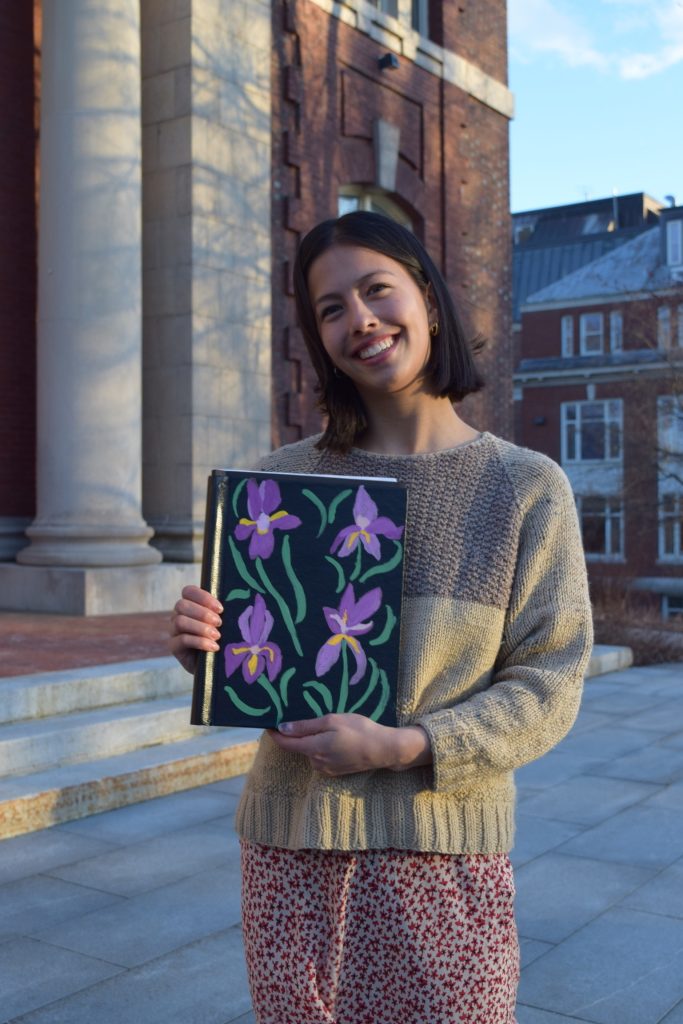
In the Fall of 2023, I researched and wrote about the history of Korean plant-based foodways compared to modern assumptions about Asian food for my undergraduate senior thesis. This thesis was the culmination of years of personal essays, papers, and conversations with peers about what it means to be Asian and vegan.
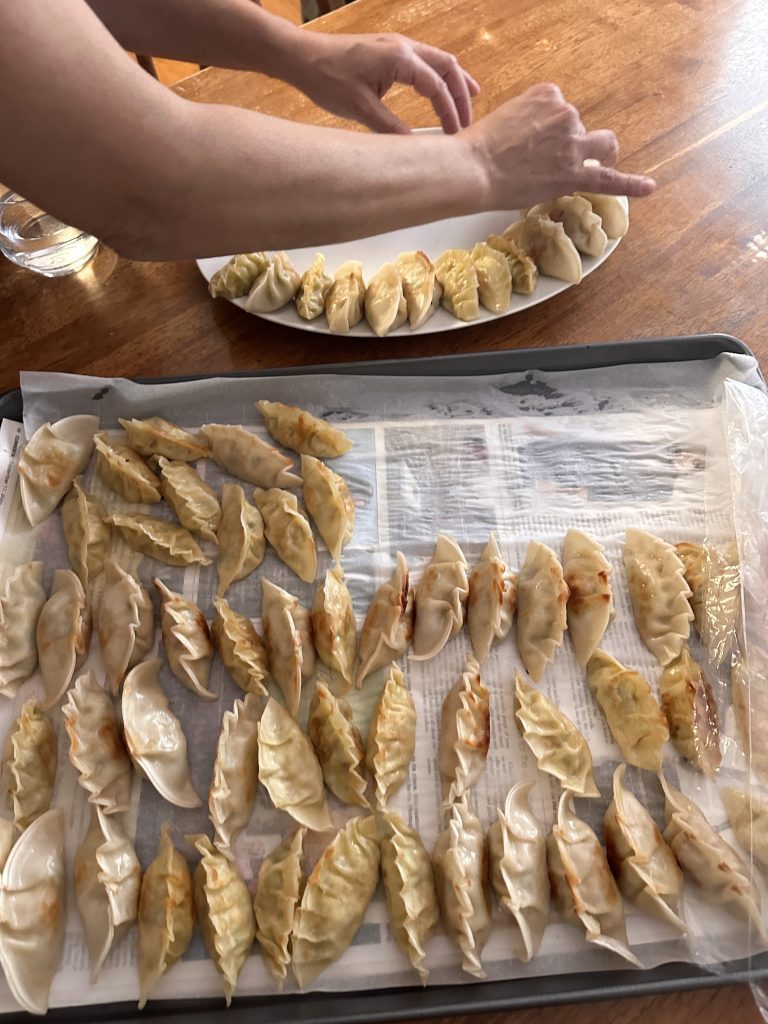
Food had always been the avenue through which I felt closest to my Korean heritage. Every summer, my grandmother would expertly crimp hundreds of mandu (Korean dumplings) that she would serve alongside a spread of colorful vegetable side dishes called banchan. I loved learning how to pronounce the Korean names of my favorite foods, and my grandmother loved teaching me how to prepare them myself. When it came time to select a topic for my thesis, it made perfect sense to write about two central pillars of my identity: my veganism and my Korean heritage.
In my thesis, I explored common tropes about Korean “meat” consumption and how these narratives conceal Korean cuisines’ vegan roots. I became fascinated by the duality of both intrigue and disgust that surrounds Asian food. This phenomenon is subtle but seeps into all corners of society from the comments I got about the “smelly” food in my thermos at lunch in elementary school, to racist jokes about Asian people eating animals in pop culture like TV shows. At the same time, Asian cuisines are beloved and co-opted by so many White people in the United States. I noticed that whether positive or negative, most of the attention surrounding Korean food focuses on the consumption of animals. What this sensationalized imagination of Korean and other Asian cuisine neglects is the deep history of vegan eating.
While entrepreneurs get to profit millions of dollars off of professedly revolutionary “new” vegan innovations, Asian cuisines are repeatedly branded with the reputation of being unhealthy and “meat”-centric and rarely credited for the ancient fermentation technologies and alternative protein developments that paved the way for these contemporary products. Fermentation techniques and plant-protein sources were developed and utilized over centuries by Korean Buddhist monks, yet brands with White, affluent owners are being praised for launches of their kombucha, tempeh, and pickled cabbage companies. Calling tofu, mung bean, and other Big Vegan products “revolutionary” negates the ancient vegan histories of many Asian cultures.
Throughout the twentieth century, Korean people were mocked and called racist names for their grain- and vegetable-centered diets. Colonial powers from Europe and the United States sought to increase Asian “meat” intake through civilizing rhetoric and programs. Flash forward to today, and food-as-medicine approaches and vegan cuisine have become popularized in the mainstream but claimed as Western innovations. Just as Korean diets were once colonized to increase “meat” consumption and lands were colonized to increase “meat” production, the vegan movement is becoming a colonized space exclusionary of traditional Asian ecological and health knowledge.
So, should vegan and vegan-curious individuals avoid buying new and trending vegan products? Not necessarily. The purpose of this blog is not to shame those who get excited about a new vegan product launch. It is a reminder that the vegan movement is for everybody. It is a reminder that eating vegan is not new. It is a reminder to confront White, capitalist veganism and to learn more about histories behind some of the most popular vegan staples.
There was a time when I worried veganism would be incompatible with my Koreanness. I worried that being vegan would distance me further from my Korean identity. But through this research and through my personal experiences, being vegan has allowed me to deeply engage with my Korean heritage. It has allowed me to learn my grandmother’s recipes that are vegan by nature and to connect with her over conversations about food, migration, health, and her upbringing. At F.E.P., so much of the work we do through resources like our cultural food sites is intended to make veganism feel approachable and culturally relevant. I am grateful for the opportunity to share my story and help vegans and the vegan curious find recipes that feel familiar to them. This AANHPI Heritage Month, I’m reminded that for me, eating vegan is a recovery and acknowledgment of pre-colonial foodways and traditional diets centered around plants.